
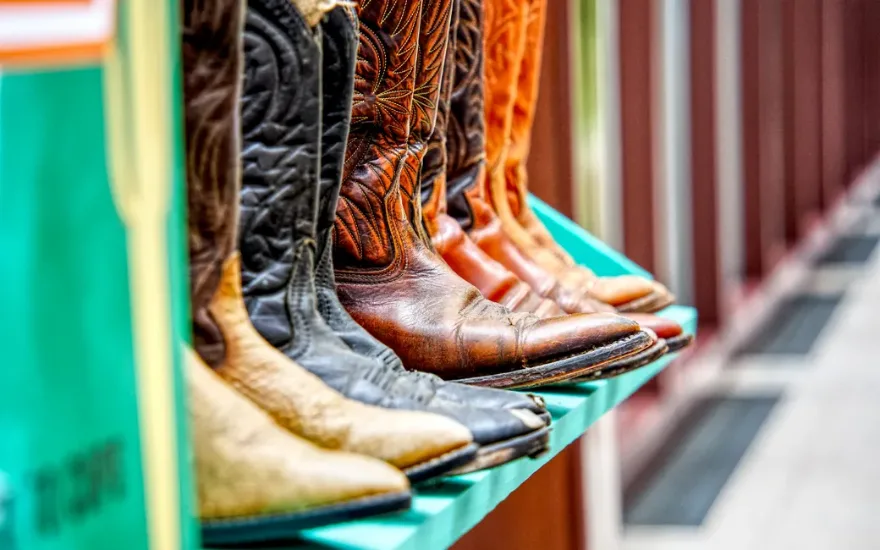
How Should Riding Boots Fit?
The right riding boots keep your leg secure and your day comfortable. Here is how to get the fit right, long boots and short.
Horse Riding Equipment · 6 min read
Riding boots do more than finish off a smart turnout. They protect your lower leg, keep your foot secure in the stirrup, and make long days in the saddle far more comfortable. Getting the fit right matters, and with long boots it depends on more than your shoe size. Here is what to look for.
Should you choose long boots or short jodhpur boots?
The first decision is the style. Long boots reach to just below the knee and give a close, even contact from knee to ankle, along with the classic look favoured in dressage, showing and jumping. They are the smarter option, but they cost more and need a good fit around the calf.
Short jodhpur boots finish at the ankle and are far more flexible. Worn on their own they are perfect around the yard, and worn with half chaps they give a very similar close leg to a long boot at a fraction of the price. For most everyday riders, short boots and half chaps are a practical starting point.
How do you measure for long riding boots?
Long boots are sized on three measurements, not just your usual shoe size. Getting all three right is the difference between boots you love and boots that rub or gape.
Foot size
Start with your normal shoe size as the base, remembering that sizing can vary between brands.
Calf width
Measure around the widest part of your calf. This is the measurement most people forget, and it is the one that stops a boot slipping down or pinching.
Leg height
Measure from the floor to the back of your knee while standing. Do this in the socks and breeches you will actually ride in, ideally later in the day when your legs are at their largest.
Check all three against the maker's size chart before you buy, and if you fall between options, think about how the boot is cut and which measurement matters most for your leg.
How should new riding boots feel?
New leather long boots often sit a touch high at the back of the knee, which can feel odd at first. That is normal and expected, because the leather drops and softens as you wear it in, settling to the right height after a few weeks. The boot should feel snug but never painful, with your foot comfortable and the calf close without digging in.
Short boots should fit like a well-made shoe from day one: secure at the heel, with room to wiggle your toes and no slipping up and down as you walk.
Breaking in leather riding boots
Leather moulds to your leg with wear, so take it steadily at first. Wear new boots around the house or yard before a long ride, use a leather conditioner to keep them supple, and expect a short settling-in period rather than instant comfort. If a particular spot rubs, a little more conditioner and a few shorter wears usually sort it out. Boot trees or shapers help the leg of the boot keep its shape between rides.
Leather or synthetic riding boots?
Both have their place, and the right choice depends on your budget and how you ride.
Leather boots look and feel lovely, mould to your leg over time and last for years with care. They cost more and need regular cleaning and conditioning. Synthetic boots are lighter, cheaper and far easier to look after; you can usually just wipe them clean. They are a sensible choice for growing children, muddy winters and riders who want low-maintenance kit. Many people own both: leather for competition, synthetic for everyday.
Which riding boots suit your discipline?
Once you know how boots should fit, it is worth thinking about the riding you do, because different disciplines lean towards different styles. For dressage, tall, stiff-topped boots give a smart, elegant line and a very close leg. For jumping and eventing, slightly softer field boots that lace at the ankle allow a little more flex for a shorter stirrup. For showing, a classic, well-polished long boot completes the traditional look, while for general riding and hacking, comfort and durability matter more than a competition finish.
If you are just starting out, or ride across several disciplines, you do not need specialist boots straight away. A good, comfortable pair of short jodhpur boots worn with half chaps will carry you through lessons, schooling and hacking, and you can add discipline-specific long boots later as your riding develops.
How long should riding boots last?
With reasonable care, good riding boots last for years rather than seasons, and leather pairs in particular can outlast several cheaper ones. Signs it is time to replace them include a sole worn smooth so it no longer grips, cracked leather that will not take conditioner, a broken or failing zip on long boots, and a heel worn down so far it no longer sits securely in the stirrup. Children's boots, of course, are usually outgrown long before they wear out, which is exactly where easy-care synthetic pairs earn their place.
How do you care for riding boots?
A little regular care keeps boots comfortable and makes them last. Wipe off mud after every ride and let boots dry naturally, away from radiators and direct heat, which cracks leather. Clean and condition leather boots regularly, and reproof the uppers of waterproof styles as needed. Store long boots upright with trees or shapers so the leg does not sag. Look after the zips on long boots too, keeping them clean and running a little lubricant along them now and then, as a seized or broken zip is the most common reason a good pair gets retired early. If a boot ever rubs in one spot, a plaster and a pair of thin boot socks will see you through while the leather softens to your leg.
When you are ready, explore our riding boots and country boots, and check the size guides for help with measuring. If you ride in short boots, a pair of half chaps is the natural next buy.
Frequently asked questions
For riding, short jodhpur boots are usually worn with half chaps to protect the lower leg and stop the stirrup leather rubbing. Around the yard they can be worn on their own.
New leather long boots are often slightly tall at the back of the knee on purpose. The leather drops and softens with wear, so they settle to the right height after a few weeks.