
What to Wear for Your First Riding Lesson
You do not need a full wardrobe to start riding. Here is what to wear, what you can borrow, and what to buy once you are hooked.
Equestrian Clothing · 6 min read
Booking your first riding lesson is exciting, and it is natural to worry about turning up in the wrong thing. The good news is that you do not need to buy a whole wardrobe to begin. A few sensible, comfortable items will see you through, and a good riding school will happily guide you. Here is exactly what to wear so you can relax and enjoy the experience.
What should you wear for your first riding lesson?
Comfort and safety come first, fashion a distant last. Aim for clothes that let you move freely and will not get caught on anything. A good starter outfit is simple:
- Comfortable, close-fitting trousers such as leggings or jodhpurs. Avoid shorts, which rub against the saddle, and very baggy trousers that can snag.
- A fitted top you can move in, with layers you can add or remove.
- Long hair tied back and any dangly jewellery left at home.
That really is enough to start. You can refine things once you know you enjoy it.
What footwear do you need for riding?
Your footwear matters more than the rest of your outfit, for one simple safety reason: your foot must not slip through the stirrup or get stuck in it. Wear boots with a small, defined heel and a smooth sole, which stops the foot sliding too far forward. Short jodhpur boots are ideal, but to start, any sturdy boot with a small heel will do. Avoid trainers, wellies with chunky treads and anything open-toed or with a thick, grippy sole.
Do you need your own riding hat to start?
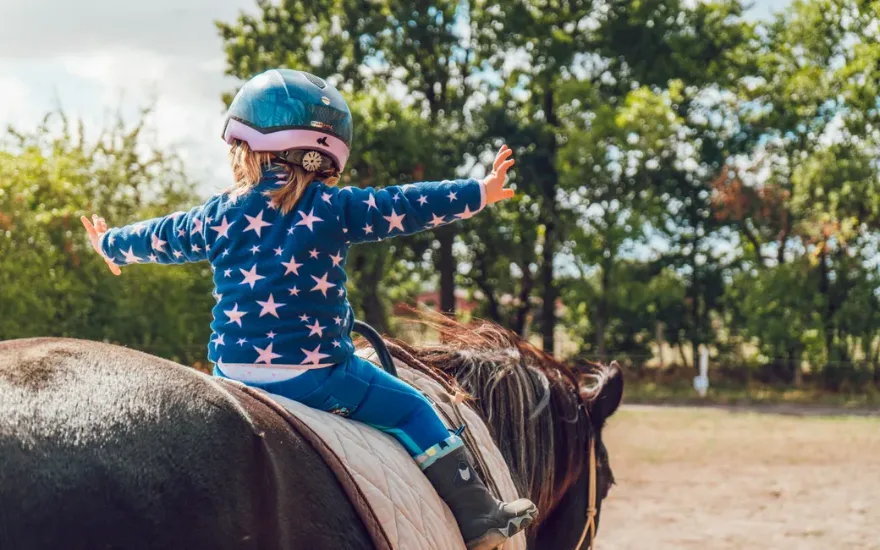
A correctly fitted, certified riding helmet is essential every time you ride, with no exceptions. The reassuring part is that most riding schools can lend you one for your first lessons, which is a sensible way to begin before buying your own. If you do borrow one, make sure the instructor checks it fits you properly. Once you are sure you want to carry on, buying your own hat and having it professionally fitted is the right next step.
How should you dress for the weather?
Riding takes you outside or into an unheated arena, so dress for the conditions. In cold weather, thin layers work far better than one bulky coat, because you warm up quickly once you are moving and can peel a layer off. Thin gloves help keep your hands comfortable without losing your feel on the reins. In summer, a light, breathable top and a bottle of water are plenty, and remember that even a cloudy day in the saddle can catch the sun.
What should you avoid wearing?
A few things make riding uncomfortable or unsafe, so leave them at home. Skip shorts and skirts, which offer no protection against rubbing, and avoid very loose or flappy clothing that could catch. Jewellery, scarves and loose bags are best left behind, and so are shoes with no heel or a thick, grippy sole. None of this needs new purchases; it is mostly about choosing sensibly from what you already own.
When should you arrive, and what should you bring?
Give yourself time and aim to arrive ten or fifteen minutes early for your first lesson. That lets you find the yard, meet your instructor and settle any nerves without rushing. Bring a bottle of water, and if you already have a riding hat and gloves, bring those; if not, the school will sort you out. Leave valuables at home or locked away, wear the sensible clothes and footwear covered above, and that really is all you need. Turning up calm and on time makes the whole thing far more enjoyable.
What happens in a first riding lesson?
Knowing roughly what to expect takes away a lot of the worry. A good first lesson usually starts on the ground, getting to know the horse or pony and learning how to sit correctly, often on a lead rein or on the lunge so you can focus on your position while someone else controls the horse. You will likely learn to hold the reins, find your balance and start to walk, with perhaps a little trot if you feel ready. It is completely normal to feel wobbly at first, and a good instructor will go at your pace. Expect to discover muscles you did not know you had the next day.
Can anyone learn to ride?
Riding is for all ages and shapes. Children can start on lead-rein lessons from around four or five at many schools, and there is genuinely no upper age limit; plenty of people take it up in their forties, fifties and beyond and love it. You do not need to be especially fit or sporty to begin, as lessons build you up gradually, though riding is more physical than it looks and does improve your balance and core strength over time. If you have a health condition or a disability, mention it when you book and ask about Riding for the Disabled centres, which do wonderful work. Above all, choose a school with qualified instructors, well-cared-for horses and a safe, friendly atmosphere.
What should you buy once you are hooked?
If you catch the riding bug, and many people do, invest gradually rather than all at once. Your own properly fitted riding hat comes first, followed by a comfortable pair of jodhpurs or breeches and proper riding boots. A body protector is well worth considering too, particularly if you move on to jumping. Ask your instructor what they would recommend for the kind of riding you want to do, and build your kit from there. For younger riders, our children's range is a good place to look.
There is no rush to buy everything, and spreading the cost over a few months is perfectly normal. Many riders start by buying their own hat and gloves, then add gloves, jodhpurs and boots once they have a regular lesson booked. The one thing worth prioritising is a hat that fits you properly, since a borrowed one is only ever a short-term solution.
Frequently asked questions
It is not recommended. Trainers have no defined heel and often a thick, grippy sole, so your foot can slide too far through the stirrup or get stuck. Wear boots with a small heel and a smooth sole.
Usually not. Most riding schools lend hats for your first lessons. Make sure the one you borrow is checked for fit, and buy your own, professionally fitted, once you decide to continue.